
The world's first hybrid VRF system in two series

Hybrid VRF
Hybrid VRF system: City Multi Hybrid VRF from Mitsubishi Electric
ProduktreiheThe climate technology of the future
With City Multi Hybrid VRF, we were the first manufacturer to launch a hybrid VRF system. "Hybrid" refers to the combination of two different elements or approaches in order to benefit from both. This innovative solution combines the strengths of a direct evaporation system with those of a water-based system. The clever combination of two heat transfer media, namely refrigerant and water, results in a decisive advantage: thanks to the separate circuits for refrigerant and water, it is guaranteed that no refrigerant circulates in the building!
HVRF technology was developed specifically for cooling and heating modern building architecture with high efficiency and comfort requirements. It not only offers a sustainable solution in view of increased legal requirements, but also opens up new possibilities for simple and modular planning of water-based systems. These strengths allow complete systems for heating and cooling based on renewable energy sources to be implemented in a single system – innovatively and flexibly.
The particularly future-proof HVRF systems work with City Multi VRF outdoor units that use the refrigerant R32. The combination of reduced refrigerant charge and low GWP value reduces the system-specificCO2 equivalent to less than 21% compared to conventional VRF systems with R410A – meaning you are already prepared for future targets and regulations. Its strengths are evident in green buildings as well as in LEED, BREEAM, or DGNB certifications.
How do hybrid VRF systems work?
FunctionVRF vs. HVRF (hybrid)
Hybrid VRF technology is a further development of VRF technology. VRF systems are based on the use of refrigerants that circulate directly between the outdoor and various indoor units. Thanks to the variable refrigerant flow, VRF systems can individually regulate the cooling and heating requirements of different zones in a building. The system uses more complex piping systems that direct the refrigerant directly to the various parts of the building.
An HVRF system combines this VRF technology with water-cooled systems. Here, the refrigerant only circulates between the outdoor unit and a central hybrid controller. From this hybrid controller, water is used as a heat transfer medium, which then circulates to the individual indoor units. The hybrid VRF system minimizes the volume of refrigerant that enters the interior spaces directly, reducing risks such as refrigerant leaks in the building areas. It essentially combines the energy efficiency of VRF with the safety and simplicity of water-cooled systems.
HVRF technology therefore offers the flexibility and efficiency of a VRF system, but uses water as the transmission medium indoors, providing additional safety and efficiency benefits.

Areas of application
ApplicationsFor buildings with a future
Hybrid VRF systems are particularly useful in buildings where individual temperature control, energy efficiency, and safety are of great importance. They are especially advantageous in buildings with strict regulations regarding refrigerant leaks or in buildings where greater safety with regard to refrigerants is desired.
Areas of application where City Multi Hybrid VRF shows its strengths:
Hotels
Hotels are places where guests should feel safe and comfortable. In hotels, hybrid VRF systems score points on the one hand by allowing the operating mode (cooling and heating) to be set individually for each room. On the other hand, the mild outlet temperatures are perceived as very pleasant. The use of a hybrid VRF system also eliminates the risk of refrigerant leaks.
office building
Different areas or floors may have different climate requirements. With a hybrid VRF system, rooms can be cooled or heated individually, and excess heat from rooms that need to be cooled can be used for heating—or vice versa. This helps to reduce operating costs.
Trade and retail
Different stores may have different temperature requirements depending on customer frequency, size, and the products sold. The advantages of an HVRF system also come into play in large stores, especially if refrigerant pipes are not desired in areas where people are present. The flexible planning and design of the system also offer advantages when it comes to redesigning spaces at a later date.
residential complexes Hybrid VRF systems are particularly suitable for high-end residential complexes where residents want individual temperature control in their units. For owners or management companies, the energy savings offered by hybrid VRF systems can also lead to lower operating costs.
DOWNLOAD BROCHURE CASE STUDY
Modern hotel air conditioning
Advantages of City Multi Hybrid VRF systems
benefitsThe modern air conditioning and heating solution for demanding projects
Energy efficiency: The water-based system ensures a high level of comfort and energy efficiency. This is made possible by the latest generation of inverter compressor technology, large-area microchannel aluminum heat exchangers, and the consistent development of all system components for high seasonal energy efficiency.
Refrigerant-free building: With hybrid VRF technology, refrigerant is only used between the outdoor unit and the central refrigerant distributor. After that, the energy is exchanged with water, which is then transferred to the rooms to be air-conditioned. Thanks to the use of water as a heat transfer medium, DIN EN 378 does not apply in individual rooms.
Future-proof: The particularly future-proof HVRF systems work with City Multi VRF outdoor units that use the refrigerant R32. The combination of reduced refrigerant charge and low GWP value reduces the system-specific CO2 equivalent compared to conventional VRF systems with R410A. Its strengths are therefore just as evident in green buildings as they are in LEED, BREEAM, or DGNB certifications.
Intelligent control: HVRF systems can be controlled using any of the controls in the extensive Mitsubishi Electric range – intuitive operation via buttons, touchscreen, or Windows interface, locally or across interfaces as system controls for central operation and monitoring of entire buildings and building complexes. Intelligent control for efficient energy management and maximum cost transparency.
Simple planning: All necessary hydraulic components are already included in the hybrid VRF system. The built-in pumps are optimized for variable water flow and supply the indoor units with the necessary cold/hot water. Thanks to inverter technology, buffer tanks are not necessary. Only two pipes with a very small cross-section are required for simultaneous cooling and heating operation. This greatly simplifies installation.
Quiet operation: The water in the internal circuit of the HVRF systems ensures gentle airflow temperatures and particularly quiet operation of the indoor units—resulting in significantly greater climate comfort in every room.
Let us advise you
consulting
What project are you planning?
Choosing the right heating and cooling solution for your project depends on the specific requirements of the building and the climatic conditions. Does the building require both heating and cooling? Or is the focus on maximum energy efficiency and individual zone control? Whether it's a residential building, office building, supermarket, or hotel, we will work with you to find well-thought-out solutions for heating, air conditioning, and ventilation. We are always at your side with a powerful range of services—from planning to well beyond the commissioning of your systems.
Choose between two hybrid VRF variants
Our HVRF systemsHybrid VRF as an R2 system
Simultaneous cooling and heating with heat recovery
- The R2 series enables heating and cooling via a two-pipe system and the so-called Hybrid BC Controller.
- Each individual indoor unit of the Hybrid VRF system can be operated independently in heating or cooling mode in the R2 variant.
- The heat from the rooms being cooled is used for heating elsewhere.

Hybrid VRF as a Y-system
Cooling or heating
- The Hybrid VRF Y Series enables cooling or heating operation based on the standard integrated heat pump function.
- The Y series uses a hydro unit with an integrated plate heat exchanger to exchange energy between the refrigerant and water.
- The pump then ensures that the tempered water is sent to the indoor units.


CITY MULTI HYBRID VRF – for office buildings and hotels
Hybrid VRF technology offers a sustainable solution for buildings where refrigerant pipes are not desired on the premises. While the refrigerant circulates exclusively between the outdoor unit, hybrid BC controller, and hydro unit, only water is used as an energy source in the building itself. A clever system: After all, it requires significantly less refrigerant and is ideally suited to the air conditioning requirements of the future in view of increased legal requirements.
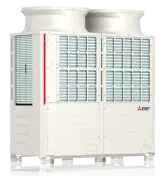
City Multi HVRF
PUHY-M
City Multi HVRF
PURY-EM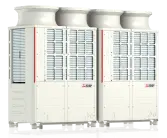
City Multi HVRF
PURY-EP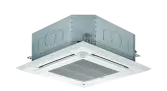
4-way ceiling cassette
PLFY-WL
Compact wall-mounted units
PKFY-WL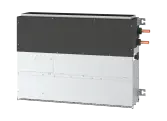
Compact floor-standing units
PFFY-W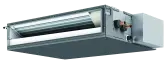
Ceiling concealed ducted unit
PEFY-WP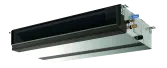
Ceiling concealed ducted unit
PEFY-WPromotion of HVRF systems
promotionFederal funding for efficient buildings - BEG
There are subsidy options available for hybrid VRF systems, including those for refrigeration compressors (as an individual measure within the framework of the Federal Subsidy for Efficient Buildings - BEG). Further details on the subsidy options can be found on our information pages on BEG subsidies for our systems.