
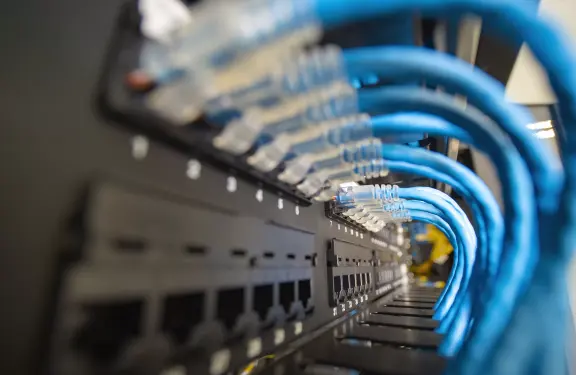
Server Room & Equipment Room Cooling
Air Conditioning Units and Climate-Controlled Cabinets
Server rooms and equipment rooms have specific requirements for indoor climate control. Unlike in offices or production areas, servers, control systems, and network equipment run continuously—and are sensitive to temperature fluctuations or inappropriate humidity levels.
Requirements for Air Conditioning in Technical and Server Rooms
A cooling failure can lead to malfunctions or system failures within a short period of time. For this reason, air conditioning systems for server and equipment rooms are designed for precise control, continuous operational reliability, and high reliability. Professional air conditioning thus ensures stable operating conditions, protects the technical infrastructure from damage, and contributes significantly to long-term operational reliability.
A suitable solution must therefore:
• Ensure constant temperature control
• Maintain humidity within the specified range
• Ensure even air distribution without hot spots
• be designed for 24/7 operation
• Be easy to maintain and monitor
Airflow within the room is equally important. Only when cooled air is directed specifically to the equipment and warm air is reliably removed can temperature and operational reliability remain stable over the long term.
Solutions for Air Conditioning in Server and Equipment Rooms
SystemsSystem Categories for Different Requirements
Depending on the room size, heat load, and usage, server and equipment rooms have different air-conditioning requirements. The most critical factors are temperature stability, controlled humidity, and - in cases of regular foot traffic - an adequate supply of fresh air.
Temperature:
IT manufacturers recommend ambient temperatures between 18 and 27 °C for technical equipment. Persistently high temperatures significantly shorten the service life of components. Professional systems ensure minimal temperature fluctuations, even air distribution, and the prevention of hot spots - and are often designed with redundancy for critical IT systems.
Humidity:
Humidity also has a significant impact on operational safety. Excessive humidity can lead to condensation and corrosion, while air that is too dry promotes electrostatic discharges. The recommended range is 40–60% relative humidity. While split-type air conditioners do dehumidify the air, climate-controlled cabinets also allow for precise control and monitoring.
Fresh Air:
If technical rooms are accessed regularly, additional requirements from the Technical Rules for Workplaces (ASR) apply. The guideline is approximately 50 m³ of fresh air per person per hour. This air often needs to be conditioned to prevent temperature and humidity problems. If the demand is higher, separate ventilation systems with air conditioning are recommended.
These requirements give rise to different system categories, which are selected based on the specific application - ranging from split-system air conditioners to climate-controlled cabinets.
Split-type air conditioners for small equipment and server rooms
Split Air Conditioning Solutions
Reliable air conditioning for compact IT environments
Split-type air conditioners offer a cost-effective and energy-efficient solution for smaller server and equipment rooms, where reliable temperature control is particularly important.
Typical features:
• energy-efficient operation
• compact design
• quick installation
• suitable for small to medium heat loads
Typical applications:
• Small server rooms
• Network cabinets and equipment niches
• Communications rooms
• Control systems in office and commercial buildings
IT RAC System MSY-TP-VF2 / MUY-TP-VF2
Wandgeräte PKA-M-L-KAL3
Kälteleistung (kW) 3,6 - 9,5
Deckenunterbaugeräte PCA-M-KA3
Kälteleistung (kW) 3,6 - 13,4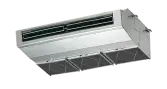
Deckenunterbaugeräte PCA-M-KA3
Kälteleistung (kW) 3,6 - 13,4Direct-Evaporation Refrigerated Cabinets
Direct-Evaporation Refrigerated Cabinets
For precise temperature and humidity control
These climate-controlled cabinets are specifically designed for sensitive technical environments where both temperature and humidity must be precisely controlled.
Typical features:
• Precise temperature and humidity control
• High air circulation for consistent conditions
• Reliable continuous operation
• High operational reliability for sensitive equipment
Typical applications:
• Server and IT rooms
• Rooms with sensitive control or automation systems
• Telecommunications rooms
• Technical areas with specific climate requirements
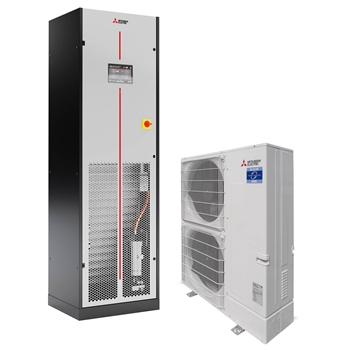
s-MEXT-G00 DX S 006 - D 044
6,8 - 42,3 kW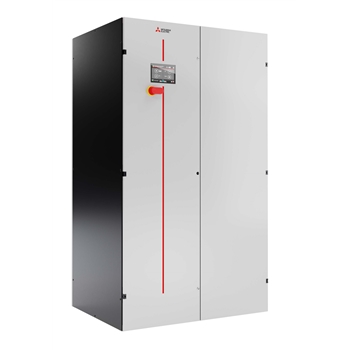
x-MEXT-i-G02-DX 029 - 140
29 - 140 kW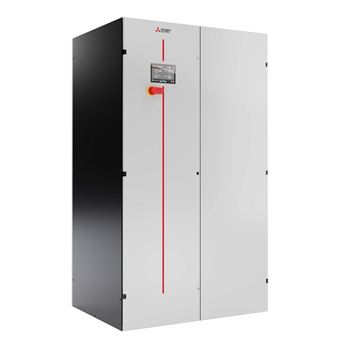
x-MEXT-f-G02-DX 035 - 136
34,6 - 137 kW
x-MEXT-f-G02-DW 035 - 136
36,6 - 145 kW
x-MEXT-i-G02-DW-FC 029 - 108
30,5 - 113 kW
x-MEXT-f-G02-DW-FC 035 - 098
37,6 - 105 kW
x-MEXT-f-G02-DW-DF 035 - 098
36,2 - 101 kW
x-MEXT-i-G02-DW-DF 029 - 108
36,2 - 109 kW
x-MEXT-f-G02-DX-DF 035 - 098
36,2 - 101 kW
x-MEXT-i-G02-DX-DF 029 - 108
36,2 - 109 kWCold-Water Climate Cabinets
Cold-Water Climate Cabinets
For utility rooms connected to a central cooling system
Cold-water climate control cabinets combine precise room climate control with existing building cooling systems. They are particularly well-suited for integrated building designs with central cooling.
Typical features:
• Precise control of temperature and humidity
• Integration into existing chilled water or building systems
• Quiet operation within the room
• Suitable for demanding technical areas
Typical applications:
• Larger mechanical rooms in office or administrative buildings
• Server rooms with a central cooling system
• Mechanical rooms in hospitals, laboratories, or public buildings
• Buildings with centralized cooling and building services systems
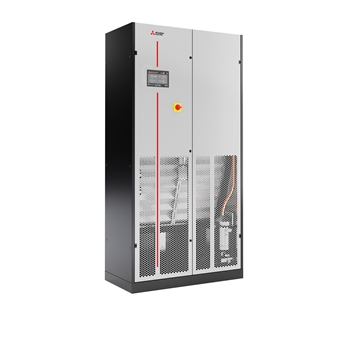
w-MEXT DF 009 - 016
7,9 - 15,4 kW
w-MEXT DL 006 - 026
4,7 - 10,8 kW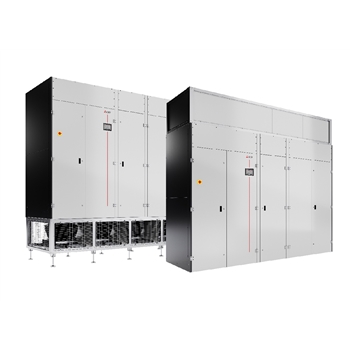
w-MEXT-XL 150 - 300
193 - 336 kW
w-MEXT 006 - 026
5,9 - 34,2 kW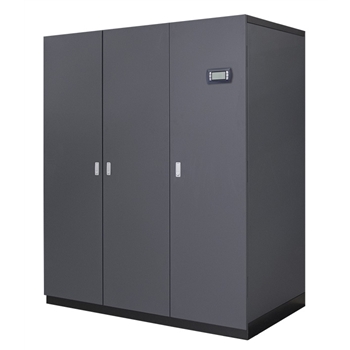
w-NEXT S 045 - 215
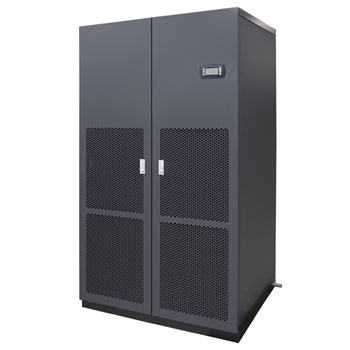
w-NEXT DL 042 - 042
11,6 - 41,3 kW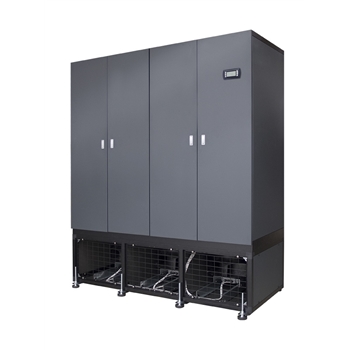
w-NEXT2 S 065 - 226
58,2 - 227 kWPlanning & Design
Planning & DesignThe foundation for a sustainable solution
While the climatic requirements were described earlier, the planning phase focuses on implementing them in a technically reliable manner. A precise design ensures that temperature, humidity, and air distribution remain within the optimal range at all times.
Load support & airflow
The basis for this is an analysis of the actual heat loads as well as the proportions of sensible and latent cooling capacity. Equally important are the airflow paths within the room and any potential short-circuit airflow.
Therefore, the following are included in the planning:
• Optimal equipment positions and spacing defined
• Service access points taken into account
• A reliable condensate management system provided
This ensures that the cooled air reaches the equipment precisely and that the heat generated is reliably dissipated.
Redundancy & monitoring
To ensure a high level of operational reliability, systems are often designed with redundancy features, such as alternate operation or additional backup units. Automatic switchover and integrated alarm functions enable a rapid response in the event of a malfunction.
Integration with GLT or BMS systems allows for centralized monitoring of operating conditions, trend data, and fault messages - an important foundation for predictive maintenance and stable system availability.
Energy Efficiency & Operating Costs
The design specifically incorporates energy-efficient components such as inverter technology and EC fans. Optimized airflow also helps to reduce energy consumption over the long term.
Depending on the location and system design, additional concepts such as free cooling or heat recovery can be incorporated into the planning to further reduce operating costs.
Grants for Air Conditioning in Server and Equipment Rooms
Funding
Modern, energy-efficient serverroom cooling systems may be eligible for government subsidies under certain conditions. Under the Federal Program for Energy-Efficient Buildings (BEG), investments are subsidized if the systems installed can be shown to contribute to reducing energy consumption and CO₂ emissions.
Efficient components, modern control technology, and professional planning of the entire system all play an important role in this regard.
FAQ on Server and Equipment Room Air Conditioning
FAQFor most IT devices, a temperature range of 18 to 27 °C is recommended. Prolonged exposure to higher temperatures can shorten the service life of electronic components and increase the likelihood of failure.
Both excessively high and excessively low humidity can cause damage. Excessively high humidity can lead to condensation, corrosion, and short circuits. Excessively low humidity promotes electrostatic discharge (ESD), which can damage sensitive components. The optimal range is usually 40–60% relative humidity.
For small equipment rooms with a low heat load, a split-system air conditioner may be sufficient. It provides reliable cooling but does not offer precise humidity control or continuous monitoring. For more demanding applications, climate-controlled cabinets are better suited.
Climate-controlled cabinets are used when constant temperature and humidity levels, high control accuracy, and continuous operation are critical - for example, in server rooms, telecommunications facilities, or sensitive control areas.
Direct-evaporation air-conditioning cabinets generate cooling directly within the unit and are suitable for standalone solutions within a room. Chilled-water air-conditioning cabinets are connected to a central cooling supply and are particularly useful in buildings with existing chilled-water infrastructure.
The required cooling capacity is determined by the electrical power consumption of the equipment, the lighting, any people in the room, and external heat sources. A professional design also takes into account reserves for future expansions.
Even high-performance air conditioners cannot prevent hot spots if the air is not directed properly. The key factors are targeted supply air distribution, unobstructed return air paths, and preventing short-circuit airflow between supply and return air.
Redundancy is recommended for business-critical IT systems. If one device fails, a second system can take over the cooling task. This significantly reduces the risk of overheating and system downtime.
If people are regularly present in the room, the requirements set forth in the technical regulations for workplaces apply. As a guideline, approximately 50 m³ of fresh air per person per hour is recommended. This air usually needs to be conditioned to prevent temperature and humidity problems.
Modern systems use inverter technology, EC fans, and intelligent control systems. This significantly reduces operating costs - especially during part-load operation, which is common in mechanical rooms.
Under certain conditions, investments in energy-efficient HVAC systems may be eligible for funding, for example, through the Federal Funding Program for Energy-Efficient Buildings (BEG). It is important to note that funding applications must generally be submitted before the project begins.