BEG subsidy for heat pumps
Secure attractive subsidies for heating system modernization
Blog article 07.02.2024The majority of heating systems installed in Germany are outdated. A good 21 million heat generators currently supply buildings with heat – according to the German Heating Industry Association, around 53 percent of these are technically outdated and therefore no longer efficient.
Reduction potential in the building sector
Reduce CO2Looking at the climate targets in Germany and Europe, urgent action is needed at this point. Inefficient heating systems contribute significantly to excessive CO2 emissions. The large number of outdated heating systems therefore represents enormous potential for CO2 reduction in the building sector: by 2030, annual emissions must be reduced from 118 million tons to 67 million tons.
Federal funding for efficient buildings creates an attractive framework for the use of new, efficient heat generators that do not rely on fossil fuels. Those who use renewable energies for heat generation receive extensive subsidies to support their investment.

Mitsubishi Electric heat pumps eligible for subsidies
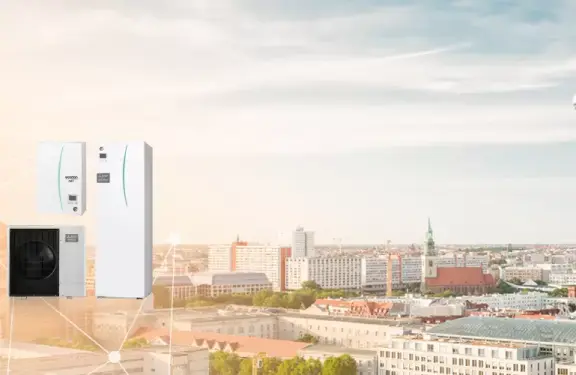
Heat pump subsidiesMitsubishi Electric offers a comprehensive range of heat generators that enable our customers to benefit from BEG subsidies.
All classic Ecodan air-to-water heat pump systems meet the requirements for federal subsidies. This means that all Ecodan heating heat pumps - regardless of the compressor technology used - are eligible for BEG subsidies as individual measures.

The Geodan brine/water heat pump, which can also replace existing, inefficient ground-coupled heat pumps during renovation, is also eligible for subsidies.

The installation of eligible air-to-air heat pumps as fully-fledged heating systems is eligible for the same subsidies as water-based heat pumps.

Efficient heating systems are promoted in all segments
Promotion of efficient heating systemsAll sub-sectors of the BEG provide subsidies for energy-efficient heating systems: the greater the integration of renewable energies, the higher the subsidy.
Among the individual measures, heat generation is clearly one of the eligible options for increasing efficiency in building renovation. Electricity-based systems, such as heat pumps, which do not use fossil fuels, receive special subsidies here: the basic subsidy rate of 30 percent applies to all heat pump solutions that meet the minimum technical requirements of the BEG. Depending on the area of application, type of applicant, or technology used, cumulative bonuses of between 5 and 30 percent can be added. However, the maximum subsidy rate is capped at 70 percent. Owner-occupiers can achieve the maximum rate for the residential unit they use themselves. The graphic shows the entire structure.
It does not matter which energy source the heat pump system uses or how the heat is brought into the building. Air-to-water, brine-to-water, and air-to-air heat pumps are all eligible for subsidies if they meet energy efficiency requirements and have been tested/certified by independent bodies.
An energy efficiency expert is not required here, as the eligible, certified systems are already listed with KfW.

Renewable energies increase subsidies for systemic measures
Increase subsidiesThe promotion of systemic measures is not about individual measures or areas, such as heat generation. Rather, all projects that ultimately lead to a building's energy status reaching a certain level of efficiency are considered as a whole.
However, heat pumps play a key role here. Thanks to their high efficiency, they significantly reduce the building's primary energy requirements, which leads to a better energy rating.