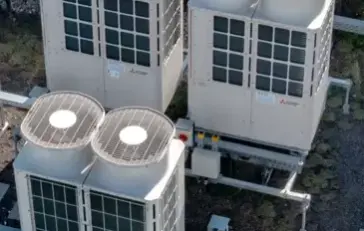
Replacing an oil or gas heater with a heat pump
How to successfully modernise your heater
Blog article 03.04.2023Is your gas or oil heating system no longer running efficiently and urgently needs replacing? In this case, a heat pump is the ideal choice. Not only does it increase the value of your property, is also reduces operating costs. However, retrofitting a heat pump in an existing building is somewhat more complicated than in a new build, where the system can be designed immediately for the new house.
In general, every building with an oil or gas heating system can be converted to heat generation with a heat pump. the lower the flow temperature in the heating system, the more efficiently the heat pump will operate. When outside temperatures fall, a building loses more and more heat through the building envelope. This may require higher inlet temperatures – and the efficiency of the heat pump may decrease. In this article, we show you which refurbishment measures are necessary to ensure that the new heat pump fulfils your expectations.
These are the right criteria for a heat pump
CriteriaThe newer buildings in which the heat generator is now due to be replaced are a good 20 years old. When refurbishing the current oil orgas heating,nothing stands in the way of using a heat pump. This is because energy-efficient construction was already mandatory at the time the building was erected. The building envelope is already appropriately insulated and the windows have double glazing. As a result, the inlet temperature in the heat distribution network is already significantly lower than in the older building stock and can be reduced even further if necessary. These houses often have underfloor heating – a very good “partner” for the heat pump.
If the building is older, this is not automatically an obstacle to a heat pump. More important than the year of construction is the date of the last energy-efficient refurbishment, including the framework conditions applicable at that time. In 1977 and 1978, for example, the first thermal insulation ordinance and the first heating systems ordinance came into force, the requirements of which made it possible to systematically reduce heating requirements during the oil crisis of the early 1980s. Accordingly, houses that were renovated during this period often have good prerequisites for a heat pump, even without additional insulation of the building envelope.
How worthwhile is thermal refurbishment?
RefurbishmentThe less heat needs to be generated, the better. Energy-efficient refurbishment of an old building therefore makes sense in any case. The respective manufacturers of insulation, windows, doors and heat generators naturally take a different view of what should be considered first. Only on the basis of a specific individual heat requirement calculation can be discussed, whether other measures are necessary for your building before changing the heat generator. One factor that you can easily determine in advance provides a clear indication: the inlet temperature in the existing system.
You get a green light when you determine an inlet temperature of max. 50 °C
Inlet temperatureBefore starting any heating system refurbishment process, the heating requirements of a building should always be determined in detail. At least, the inlet temperature delivers a basic statement on the use of a heat pump. If you use radiators, you need to take a closer look at this point. A simple test at really low outdoor temperatures provides important insights: Reduce the flow temperature of your boiler to 50 °C. If this is sufficient to achieve your desired thermal comfort, the heat pump can be used. If not, the first step should be to check whether only some radiators need to be replaced with larger models. These improvements are often sufficient.
 Specific heat requirement according to year of construction
What to do if you need more heat?
Greater heat requirementsIf the required inlet temperature is higher than 50 °C, this does not automatically mean that extensive and costly structural measures are required. For example, existing radiators can often be replaced with so-called fan convectors– such as the Mitsubishi Electric iLife 2 Slim Eco convectors. They are installed in place of the existing radiator and emit some of their heat into the room via the front. This radiant heat provides a level of comfort comparable to conventional radiators. The remaining heat is released into the room as air flow (convection). Whisper-quiet fans ensure optimum distribution and a significantly higher degree of utilisation, which can relevantly improve the heating system overall efficiency. Thanks to this technology, sufficient heat energy can be provided for your rooms with inlet temperatures of 40-45 °C. Therefore, their installation can generally also be subsidised according to the currently valid subsidy models when using a heat pump.

Replace or combine oil or gas heating?
Oil or gas heatingWhat to do if you still have a well-functioning gas or oil heating system? Until recently, this meant bivalent operation – the control system of a modern heat pump can easily integrate another heat source and, over and above, cover peak loads at low outside temperatures. But these days, everyone should take a closer look at new options: One important point is that in bivalent operation costs for gas meters, boiler maintenance and chimney sweeps remain the same. Oil and gas prices have risen to record levels in recent months, and the annually increasing CO2 levy is gradually adding an additional cost factor – not to mention the supply situation.
On the other hand, a complete switchover is favoured by current funding models: Instead of fixed amounts, percentages of the refurbishment measure total costs are now reimbursed. Additional bonuses for the complete switchover and the exclusion of fossil fuels from the heating supply are a further incentive. This means, for example, that if you have the old oil tank removed at the same time as the oil boiler, not only the deinstallation and disposal of the oil tank are eligible for funding, but also the refurbishment of the room in which the oil tank was located. For example, the costs that the painter estimates for the design of the old storage room can be subsidised by 35 or even 40 %, just like the heat pump. Please note: If the fossil-fuelled heating system is only disposed of after several years of bivalent operation, the disposal must be carried out entirely at your own expense. Further information on the current BEG subsidy can be found in the articleRetrofitting a heat pump.
Nevertheless, the option of bivalent operation should not be completely ruled out: If, for example, energy-saving measures are planned for the building envelope in the coming years, it makes sense to match the output of a new heat pump to the planned heat requirement. Until then, the boiler can provide the additional heat required.
A systematic approach pays off
Systematic approachIn order to successfully plan and implement a heating refurbishment in existing buildings, it is important to harmonise the structural situation, your comfort requirements and your financial leeway as well as the current funding options as optimally as possible. In existing buildings, it is first advisable to find out the technical framework conditions such as the specific heat requirement and the inlet temperature currently being used. In the majority of cases, this helps to clarify whether a heat pump can be installed without further ado. If it becomes apparent that further structural refurbishment measures are mandatory, a qualified energy consultant should be called in.